
In this article 15 sections
- Bus Medina to Makkah: Complete Travel Guide for Pilgrims
- Why Travel by Bus from Madinah to Makkah?
- Understanding the Madinah to Makkah Route
- Bus Travel vs Other Transport Options
- Preparing for Your Bus Journey
- Ihram Rules When Traveling from Madinah to Makkah
- What Happens After Arriving in Makkah?
- Practical Tips for Families and Elderly Pilgrims
- Common Mistakes to Avoid
- How to Organize Your Journey Step by Step
- Choosing the Right Bus Service for Your Needs
- Best Time to Plan Your Madinah to Makkah Journey
- Frequently Asked Travel Questions
- Plan Your Journey with Confidence
- Contact Details
Bus Medina to Makkah: Complete Travel Guide for Pilgrims
Traveling from Madinah to Makkah is a special part of the journey for many Muslims visiting Saudi Arabia for Umrah or Hajj. After spending time in the peaceful city of the Prophet Muhammad (PBUH), many pilgrims prepare to travel to Makkah to perform their religious duties. Choosing the right transport can make this journey more comfortable, organized, and stress-free.
If you’re planning to travel by bus, a little preparation can make a big difference. You need to understand the journey, know what to pack, prepare for Ihram, and choose a departure arrangement that suits your schedule. These details are especially helpful for families, elderly pilgrims, and visitors traveling to Saudi Arabia for the first time.
This guide explains everything you need to know about traveling by bus from Madinah to Makkah, including the route, journey preparation, bus travel tips, Ihram requirements, and common mistakes to avoid.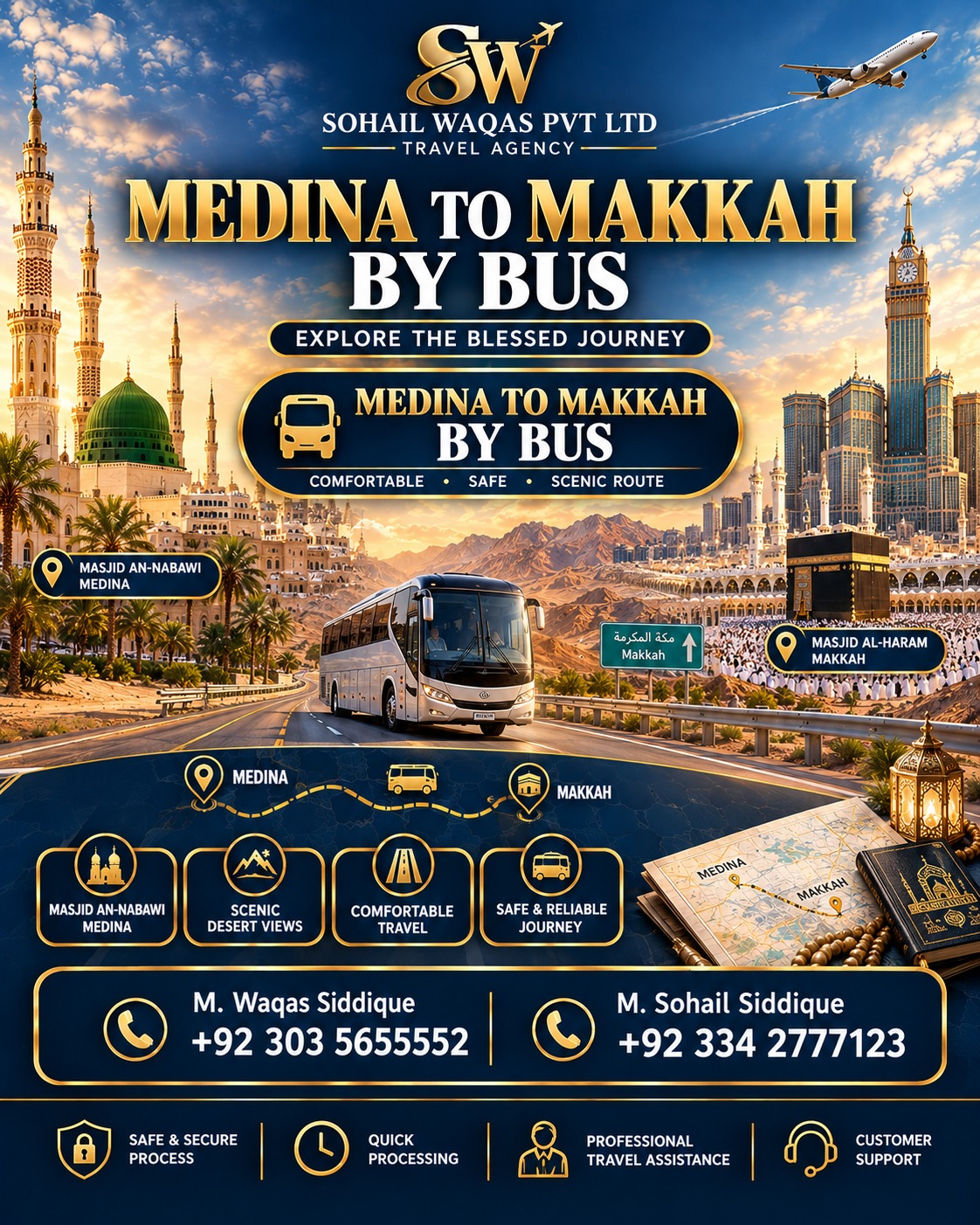
Why Travel by Bus from Madinah to Makkah?
Bus travel is a practical option for pilgrims who want to travel together and keep their journey organized. It allows you to enjoy the scenery along the road while leaving the driving to a professional driver.
For many visitors, the journey is also a chance to rest after exploring Madinah and prepare mentally for the next stage of their pilgrimage.
Here are some reasons pilgrims choose bus transportation:

-
Convenient group travel: Families and Umrah groups can travel together instead of arranging separate vehicles.
-
A straightforward journey: You can relax while an experienced driver handles the road.
-
Luggage arrangements: Many bus services provide designated luggage storage, subject to their policies.
-
Less driving stress: You don’t need to navigate unfamiliar roads or deal with driving rules in another country.
-
Time to prepare for Umrah: You can review your plans, check your belongings, and prepare for arrival in Makkah.
-
Organized transportation: Pre-arranged travel can make it easier to coordinate hotel check-in and onward transport.
The right option depends on your group size, travel preferences, departure schedule, and luggage needs. Before confirming your plans, ask the transport provider about the service, pickup location, luggage rules, and expected arrival arrangements.
Understanding the Madinah to Makkah Route
Madinah and Makkah are two of the most important cities in Islam. Although both cities are in Saudi Arabia, they are separated by a substantial road journey through the western part of the country.
A bus journey generally follows the road network connecting the two cities. The exact route can vary depending on traffic, road conditions, scheduled stops, and the transport operator.
Travelers should allow enough time for the journey rather than planning another important activity immediately after the expected arrival.
How long does the journey take?
The journey commonly takes around four to six hours by road, although actual travel time can vary. Traffic, rest stops, weather, pickup arrangements, and seasonal demand can affect the schedule.
During busy periods, including Ramadan and Hajj, roads and arrival areas may experience heavier traffic. Your bus may also need extra time for passenger boarding and luggage handling.
Keep these points in mind when planning:
-
Confirm the departure time with your transport provider.
-
Ask whether the journey includes scheduled rest stops.
-
Allow extra time for reaching your hotel after arrival.
-
Avoid booking a tightly timed activity immediately after the expected arrival.
-
Follow any updated instructions from your transport operator.
If you have elderly family members or young children with you, a little extra flexibility can help everyone travel more comfortably.
What should you expect along the way?
Much of the journey passes through the dry landscapes of western Saudi Arabia. Depending on the route and visibility, you may see open desert scenery, highways, roadside facilities, and distant rocky hills.
The journey can also provide a useful break between the two cities. After spending time walking around Madinah, you can sit back, drink water when appropriate, and prepare for your arrival in Makkah.
Keep essential belongings close to you, particularly travel documents, medication, mobile phones, and any items you’ll need before reaching your accommodation.
Bus Travel vs Other Transport Options
Bus travel isn’t the only way to get from Madinah to Makkah. Depending on your preferences, you may also consider the Haramain High-Speed Railway or private road transportation.
Each option offers a different experience.
|
Feature |
Bus |
Haramain train |
Private car |
|---|---|---|---|
|
Travel style |
Shared road transport |
High-speed rail |
Individual road transport |
|
Departure arrangements |
Set by the operator |
Scheduled train service |
Arranged by the traveler |
|
Luggage |
Subject to bus policy |
Subject to railway rules |
Depends on vehicle capacity |
|
Group suitability |
Useful for organized groups |
Useful for eligible group bookings |
Useful for families and small groups |
|
Road traffic |
Can affect travel time |
Generally avoids road traffic |
Can affect travel time |
|
Flexibility |
Depends on the service |
Depends on the train schedule |
Depends on the arrangement |
The Haramain train operates between major destinations in western Saudi Arabia, including Madinah and Makkah. However, train stations are not necessarily next to your hotel, so you should consider the time and arrangements needed to reach your final destination.
A bus may be a suitable choice if you prefer shared transportation or want your travel arrangements coordinated with an Umrah group.
A train may suit travelers who prefer rail transport and have convenient access to the stations. Private transportation may offer more flexibility for families with specific pickup requirements.
Before making your decision, compare the actual schedules, station or pickup locations, luggage policies, and accessibility arrangements.
Preparing for Your Bus Journey
Good preparation helps prevent unnecessary stress on travel day. Instead of packing everything at the last minute, organize your belongings before leaving your accommodation in Madinah.
1. Confirm your travel arrangements
Start by checking the details provided by your transport operator. Make sure you know the departure date, reporting time, pickup location, and expected arrival arrangements.
If you’re traveling as part of an organized Umrah group, ask your group leader where everyone should gather. Some services use designated meeting points rather than collecting passengers directly from hotels.
Keep your booking confirmation and contact information accessible on your phone.
2. Keep your travel documents ready
International visitors should keep their passports and relevant travel documents secure. Depending on your circumstances, you may also need your visa details, accommodation information, and booking confirmation.
It’s helpful to keep digital copies of important documents in a secure location, while protecting your personal information.
Don’t place essential documents inside checked or stored luggage. Keep them with you throughout the journey.
3. Pack a small travel bag
Your main luggage may be stored separately, so carry a small bag containing the items you’ll need during the trip.
Consider including:
-
Passport and travel documents
-
Mobile phone and charger
-
Power bank, if permitted under applicable rules
-
Drinking water
-
Light snacks, if allowed
-
Essential medication
-
Tissues and personal hygiene items
-
A light jacket or shawl
-
Any necessary items for children or elderly relatives
Check the transport provider’s baggage policy before packing. Luggage allowances, restricted items, and storage arrangements may differ between operators.
4. Wear comfortable clothing
Choose clothing suitable for sitting during a road journey. Loose, breathable clothing and comfortable footwear can make the trip easier.
If you’re preparing for Umrah, plan your clothing around the requirements of Ihram and your personal circumstances. Keep the items you need readily accessible instead of burying them at the bottom of your luggage.
You should also consider the temperature inside the bus. Air-conditioned vehicles may feel cool even when the weather outside is warm.
5. Eat and rest before departure
Try to get adequate rest before the journey. Traveling while exhausted can make the trip feel longer, especially if you’ve already spent several days sightseeing or performing prayers in Madinah.
Have a suitable meal before departure, and keep drinking water according to your needs. If you experience motion sickness, prepare in advance and consult a healthcare professional or pharmacist about appropriate options.
These simple steps can help you arrive feeling more comfortable and ready for the next stage of your journey.
Ihram Rules When Traveling from Madinah to Makkah
Ihram preparation is one of the most important parts of traveling from Madinah to Makkah for Umrah.
For pilgrims traveling from Madinah, the designated Miqat is Dhul Hulayfah, also known as Abyar Ali. It is the Miqat associated with the people of Madinah and those who pass through it intending to perform Hajj or Umrah.
Pilgrims intending to perform Umrah should understand when and where they must enter Ihram. The exact arrangements can depend on the route and the traveler’s circumstances.
What is Ihram?
Ihram refers to the sacred state entered when intending to perform Hajj or Umrah. It involves making the intention for the pilgrimage and observing specific restrictions.
For men, Ihram clothing generally consists of two unstitched cloths. Women may wear their normal modest clothing, following the relevant rules of Ihram.
The clothing itself is not the only requirement. The intention and observance of the rules are central to entering Ihram.
When should you enter Ihram?
If you’re traveling from Madinah to Makkah specifically to perform Umrah, you should plan your Ihram arrangements before passing the applicable Miqat.
Many pilgrims prepare by bathing, changing into suitable Ihram clothing, and organizing their belongings before departure. However, putting on the clothing and entering the state of Ihram are not the same thing; the intention and applicable rulings matter.
Don’t assume that you can wait until arriving in Makkah to decide what to do. Ask your Umrah group leader or a qualified religious scholar if you’re unsure about the correct timing for your circumstances.
If your bus passes the Miqat without you having entered Ihram despite intending to perform Umrah, seek qualified religious guidance promptly about the appropriate steps.
What if you’re traveling without intending to perform Umrah?
Not everyone traveling from Madinah to Makkah has the same intention or circumstances. The applicable rulings may differ depending on whether you intend to perform Umrah or Hajj and your travel plans.
If you’re unsure whether the Miqat rules apply to your situation, consult a knowledgeable scholar before traveling. This is especially helpful if you’re visiting Makkah for multiple purposes or have a complicated itinerary.
Prepare your Ihram items in advance
To make the journey easier, consider organizing the following before boarding:
-
Ihram clothing, where applicable
-
A small bag for personal belongings
-
Unscented toiletries suitable for use during Ihram
-
Comfortable footwear
-
Any essential medication
-
Your travel group’s instructions about the Miqat
Avoid relying on a last-minute stop to prepare everything. Your bus may follow a fixed schedule, and there may not be enough time to arrange missing items.
What Happens After Arriving in Makkah?
Arriving in Makkah is an important moment for pilgrims, but it’s helpful to have a simple plan for the next few hours.
Your arrival arrangements will depend on where the bus stops, the location of your hotel, and whether you’re traveling with an organized group.
1. Confirm your drop-off point
Before leaving the bus, listen carefully to the driver’s instructions and your group leader’s guidance.
Some services may use a designated terminal or meeting point rather than stopping directly outside your hotel. Confirm how you’ll reach your accommodation before the journey begins.
If you’re traveling independently, save your hotel details and keep the address available in a form that can be shown to your driver.
2. Collect all your luggage
Check your luggage tags or other identifying details before leaving the vehicle. Make sure you have your bags, documents, phone, and other belongings.
If something is missing, inform the transport operator as soon as possible and provide a clear description of the item.
Keeping a short list of your bags can be particularly useful when traveling with a large family or group.
3. Check in and settle down
If you have a hotel reservation, keep your confirmation ready. Check-in procedures and room availability can vary, so follow the property’s instructions.
Take a little time to settle in, organize your belongings, and review your plans for visiting Masjid al-Haram.
If you’ve had a long journey, allow yourself time to rest when your schedule and religious obligations permit.
4. Plan your route to Masjid al-Haram
The distance between your accommodation and Masjid al-Haram depends on the hotel’s location. Some properties are within walking distance, while others require additional transportation.
Ask your hotel staff or group leader about the most suitable route. During busy periods, follow local traffic instructions and designated pedestrian routes.
If you’re traveling with an older relative or someone with limited mobility, plan the journey with their comfort and safety in mind.
Practical Tips for Families and Elderly Pilgrims
A road journey that feels straightforward for one traveler may be more challenging for someone with young children, mobility needs, or health concerns.
A little additional planning can make the trip more manageable.
Keep essential items within reach
Medication, identification, drinking water, and important phone numbers should remain accessible. Avoid placing these items in luggage that will be stored separately.
If someone in your group requires regular medication, plan around their normal schedule and seek professional advice if travel may affect it.
Arrange seating carefully
If you’re traveling with children or elderly relatives, ask the operator about seating arrangements before departure. Seating cannot always be guaranteed, but discussing your needs early may help.
For passengers who need mobility assistance, confirm the pickup point, boarding arrangements, and availability of suitable assistance.
Plan bathroom breaks
Long road journeys can be uncomfortable when passengers don’t know when the next stop will be.
Ask whether the bus has planned rest stops and how long they usually last. Don’t assume that the driver can stop at any location, as safety and operating rules may restrict unscheduled stops.
Stay connected with your group
Agree on a meeting point and exchange contact details with your group leader or travel companions.
If someone leaves the bus at a rest stop, make sure they understand the departure time and return location. This is particularly important when traveling with a large group.
Common Mistakes to Avoid
Even a well-planned trip can become stressful when small details are overlooked. These are some common mistakes worth avoiding.
Leaving without confirming the pickup location: A booking confirmation may not provide all the practical details you need. Verify the exact meeting point before travel day.
Packing important items in stored luggage: Keep documents, medication, and other essentials in your hand luggage.
Ignoring Ihram preparation: If you’re traveling for Umrah, understand the applicable Miqat rules before boarding. Don’t wait until you’ve reached Makkah to seek basic guidance.
Planning a tight arrival schedule: Traffic and other delays can affect your arrival. Leave a reasonable buffer before important appointments or activities.
Assuming every bus service is the same: Different operators may have different luggage policies, stops, seating arrangements, and pickup procedures.
Forgetting to check your belongings: Before leaving the bus, check your seat area and confirm that all your luggage has been collected.
Relying only on mobile internet: Keep important travel information available offline where possible. This can help if your mobile connection is weak or your phone battery runs low.
Not communicating special requirements: If a passenger needs mobility support, additional luggage arrangements, or help boarding, contact the operator in advance.
Avoiding these mistakes won’t eliminate every travel problem, but it can make your journey far more organized.
How to Organize Your Journey Step by Step
If you’re arranging the journey yourself, use the following process to keep everything in order.
Step 1: Decide on your travel date
Choose a departure date that fits your hotel arrangements and overall pilgrimage schedule.
If you’re traveling during Ramadan, Hajj, school holidays, or another busy period, plan ahead and confirm the service’s operating schedule.
Step 2: Choose a suitable transport service
Look for an operator that clearly explains its pickup arrangements, travel schedule, luggage rules, and passenger support.
If you’re traveling as part of a group, ask whether transportation is included in your existing arrangements before making a separate booking.
Step 3: Confirm the details
Before finalizing your plans, check:
-
Departure date and time
-
Pickup location
-
Expected arrival point
-
Luggage allowance
-
Rest-stop arrangements
-
Passenger assistance
-
Contact details for the operator
Keep a record of the information provided.
Step 4: Prepare for Ihram if performing Umrah
Review the relevant Miqat guidance and organize your Ihram clothing and personal items before departure.
If you’re unfamiliar with the rules, seek guidance from a qualified scholar or your Umrah group leader in advance.
Step 5: Arrive at the pickup point early
Give yourself enough time to reach the meeting point, identify your bus, and organize your luggage.
Follow the operator’s reporting instructions rather than assuming the bus will wait if you’re late.
Step 6: Travel comfortably and safely
Keep your seat belt fastened whenever available and required, follow the driver’s instructions, and store luggage securely.
Use rest stops according to the operator’s guidance, and be considerate of other passengers.
Step 7: Complete your arrival arrangements
Once you reach Makkah, collect your luggage, contact your hotel or group leader if needed, and follow your onward transportation plan.
Having these arrangements ready in advance helps you focus on the purpose of your visit instead of dealing with avoidable confusion.
Choosing the Right Bus Service for Your Needs
The best transport option isn’t necessarily the same for every traveler. Consider your priorities before confirming a journey.
If you’re traveling with a group, coordinated transportation may simplify meeting arrangements and keep everyone on the same schedule.
If you’re traveling with children, you may prefer an operator with clear boarding instructions and suitable luggage arrangements. If you’re an independent traveler, pickup location and arrival convenience may matter more.
Use these questions to evaluate your options:
-
Is the departure point easy for you to reach?
-
Does the schedule fit your hotel and pilgrimage plans?
-
Are the luggage rules suitable for your belongings?
-
Can the operator accommodate any mobility requirements?
-
Is there a clear contact person if your plans change?
-
Are the arrival and onward transportation arrangements understood?
Don’t rely solely on a short advertisement. Confirm the practical details directly with the transport provider so you know what to expect.
Best Time to Plan Your Madinah to Makkah Journey
The right departure time depends on your itinerary, the operator’s schedule, and the time you need to prepare for Umrah.
Some travelers prefer a morning departure because it may allow more time to settle into their accommodation after arrival. Others choose a different departure based on hotel check-in arrangements, family needs, or their group’s schedule.
There is no single departure time that suits everyone. Check the available services for your intended date and allow extra time during busy travel periods.
Traveling during Ramadan
Ramadan attracts many pilgrims to the holy cities. Demand for transportation, hotel services, and local facilities can increase during this period.
Confirm your arrangements early, keep your group informed, and avoid assuming that regular schedules will remain unchanged.
If you plan to perform Umrah after arriving, consider how your journey, rest, and prayer schedule will fit together.
Traveling during Hajj season
Hajj travel involves specific regulations, permits, and arrangements that may differ from ordinary travel. Access to certain areas and transport services can be restricted during the Hajj period.
Check the current official guidance and confirm that your travel plans meet the requirements applicable to your visa and purpose of travel.
Do not assume that an ordinary Umrah itinerary can automatically be used during Hajj season.
Frequently Asked Travel Questions
How long does a bus take from Madinah to Makkah?
A typical road journey may take around four to six hours, but the actual duration depends on traffic, route, stops, and the operator’s schedule. Allow additional time for arrival and hotel transfers.
Where is the Miqat for Umrah travelers leaving Madinah?
Dhul Hulayfah, also known as Abyar Ali, is the designated Miqat associated with Madinah. Pilgrims intending to perform Umrah should understand the applicable Ihram requirements and make the necessary preparations before passing their Miqat.
What should I carry on a bus from Madinah to Makkah?
Keep your passport and essential travel documents, phone, charger, necessary medication, drinking water, and other important personal items in a small bag. Check the operator’s luggage policy before departure.
Is bus travel suitable for families traveling for Umrah?
Yes, bus travel can be convenient for families because everyone can travel together. Before booking, confirm seating arrangements, luggage capacity, rest stops, and any assistance needed by children or elderly passengers.
Can I travel from Madinah to Makkah by train instead of bus?
Yes. The Haramain High-Speed Railway connects Madinah and Makkah. Check the current train schedule, station locations, baggage rules, and onward transportation arrangements to determine whether it suits your itinerary.
What should I do after arriving in Makkah?
Collect your luggage, confirm your onward transport, and check in to your accommodation. If you’re performing Umrah, make sure you have followed the applicable Ihram and Miqat requirements before arrival.
Plan Your Journey with Confidence
Traveling from Madinah to Makkah is more than a road trip for many pilgrims. It’s a transition between two deeply meaningful destinations, and careful preparation can help you make the most of it.
Confirm your transport arrangements, keep your documents secure, prepare for Ihram, and leave enough time for unexpected delays. Whether you’re traveling alone, with your family, or as part of an organized Umrah group, knowing what to expect can make the experience more comfortable.
If you need help organizing your travel arrangements, contact SOHAIL WAQAS PVT LTD for assistance with your travel planning and related services.
Contact Details
SOHAIL WAQAS PVT LTD
-
M. Waqas Siddique: +92 303 5655552
-
M. Sohail Siddique: +92 334 2777123
Contact our team to discuss your travel requirements and get guidance for planning your journey from Madinah to Makkah.
Related Reading: Canada Visa for Job Seekers: Complete 2026 Guide — full guide