In this article 26 sections
- Why Is Makkah So Important?
- 1. Masjid al-Haram: The Heart of Makkah
- 2. Safa and Marwah: An Essential Part of Umrah
- 3. Jabal al-Nour: The Mountain of Light
- 4. Jabal Thawr: A Landmark Connected to the Hijrah
- 5. Jannat al-Mu’alla: A Historic Muslim Cemetery
- 6. The Clock Tower and Abraj Al Bait Complex
- 7. Makkah Museum: Learn About the City’s History
- 8. The Cave of Hira Cultural District
- 9. Makkah’s Traditional Markets and Shopping Areas
- 10. The Kiswa Factory: Discover the Craft Behind the Kaaba’s Covering
- 11. Mina: An Important Site During Hajj
- 12. Arafat: A Central Location in the Hajj Pilgrimage
- 13. Muzdalifah: A Key Stop on the Hajj Route
- 14. Masjid al-Jinn: A Mosque With a Notable Islamic Tradition
- 15. The Birthplace Area Associated With Prophet Muhammad (Peace Be Upon Him)
- 16. The Mountains and Valleys Around Makkah
- 17. How to Choose the Best Places in Makkah for Your Trip
- 18. A Simple Guide to Planning Your Visits
- 19. Practical Tips for Getting Around Makkah
- 20. Common Mistakes to Avoid When Exploring Makkah
- 21. A Sample One-Day Plan for Makkah
- 22. How to Make Your Makkah Visit More Meaningful
- Conclusion
- Frequently Asked Questions About Places in Makkah
- Contact Details
Whether you’re visiting for the first time or returning for another Umrah, knowing where to go can make your journey easier. You can plan your prayers, understand the significance of nearby landmarks, and explore the city without making your schedule too tiring.
The best approach is to balance worship with sightseeing. Some locations are sacred parts of the pilgrimage, while others help you understand the life of Prophet Muhammad (peace be upon him), the history of Makkah, and the development of the holy city.
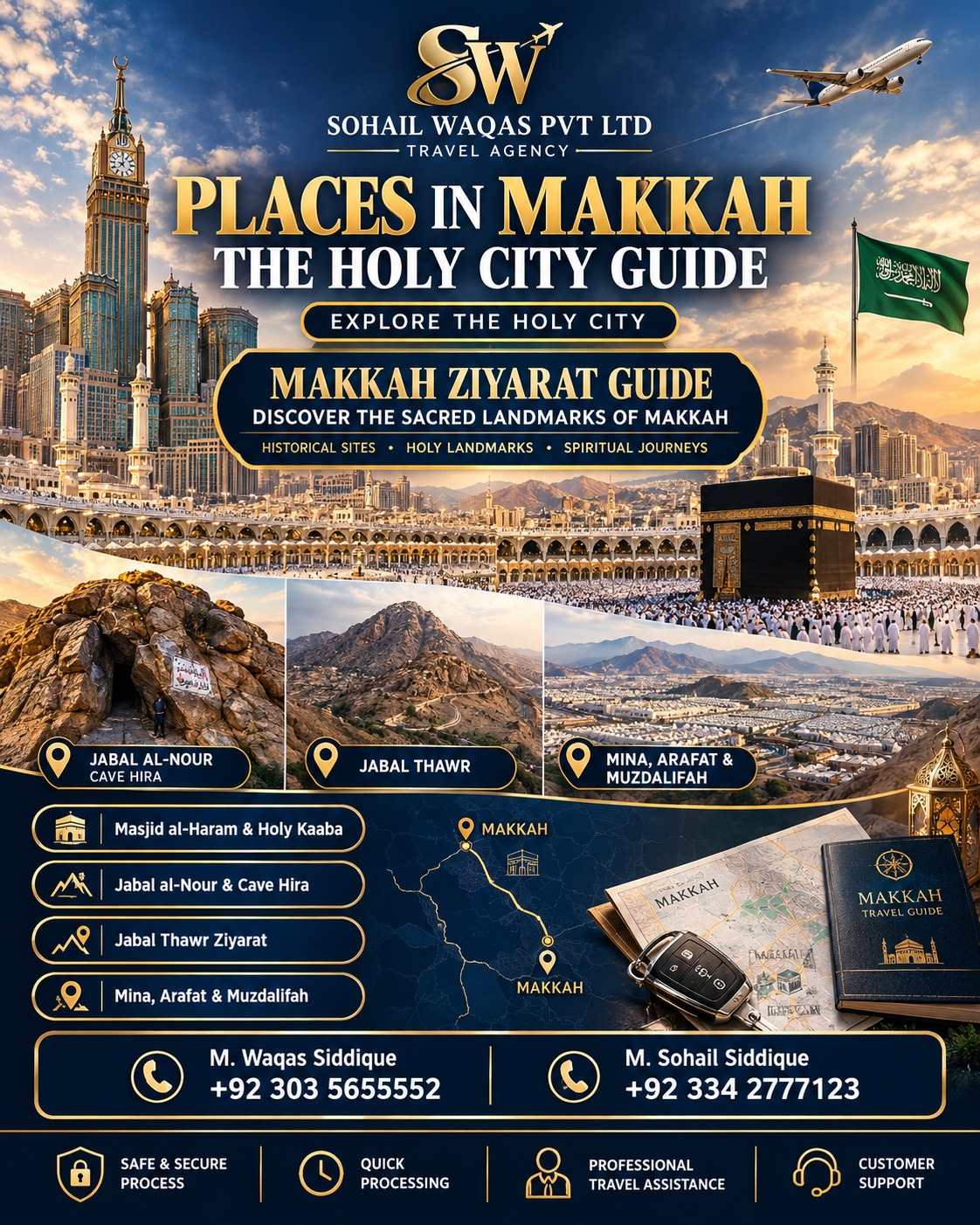
This guide explains the most notable places in Makkah, what makes each one special, how to prepare for your visits, and what to keep in mind when travelling around the city.
Why Is Makkah So Important?
Makkah holds a unique place in Islam. It is home to Masjid al-Haram, which surrounds the Holy Kaaba and is the focal point of Muslim prayer. Muslims from every part of the world face the Kaaba during their daily prayers.
The city is also closely connected to the lives of Prophet Ibrahim (Abraham), Prophet Ismail (Ishmael), and Prophet Muhammad (peace be upon them). Several events and rituals associated with Hajj and Umrah take place at locations in and around Makkah.

For pilgrims, visiting the city is not simply a holiday. It is often a deeply personal experience that requires preparation, patience, and respect for the sacred environment.
Makkah also has a modern side. Hotels, shopping areas, transport services, and visitor facilities support the large number of people who arrive throughout the year. Understanding both its religious significance and its practical layout can help you make better use of your time.
1. Masjid al-Haram: The Heart of Makkah
Masjid al-Haram is the most important place in Makkah and the main destination for Hajj and Umrah pilgrims. It surrounds the Holy Kaaba, the sacred structure Muslims face during prayer.
The mosque is much more than a landmark. It is a place of worship where pilgrims perform Tawaf, pray, recite the Quran, and make personal supplications.
What can you do at Masjid al-Haram?
-
Perform Tawaf around the Holy Kaaba when undertaking the relevant pilgrimage rites.
-
Pray in the mosque and spend time in remembrance of Allah.
-
Recite the Quran and make dua.
-
Learn about the Kaaba and the religious history of the sanctuary.
-
Observe the remarkable gathering of Muslims from different countries and cultures.
The mosque can become extremely crowded during Ramadan, Hajj, school holidays, and other busy periods. If you are visiting with elderly family members or children, agree on a meeting point and keep essential contact details available.
Wear comfortable footwear for walking outside prayer areas, follow current mosque instructions, and allow extra time to enter and leave. Access arrangements and routes can change as crowd-management needs change.
The Holy Kaaba
The Kaaba stands at the centre of Masjid al-Haram. Muslims around the world face it during their daily prayers, and pilgrims perform Tawaf by walking around it.
For many visitors, seeing the Kaaba for the first time is an emotional moment. Some people feel overwhelmed, while others become quiet and reflective. There is no single correct way to experience it.
Follow the guidance of mosque staff, avoid pushing through crowds, and don’t let photography distract you or other worshippers from prayer. The main purpose of your visit should remain worship and reflection.
Maqam Ibrahim
Maqam Ibrahim is a sacred station within Masjid al-Haram associated with Prophet Ibrahim (peace be upon him). It is mentioned in the Quran and holds an important place in Islamic tradition.
Pilgrims may notice the structure near the Kaaba during their visit. Its location and surrounding crowd-control arrangements can vary, so follow the routes and instructions in place at the time.
Don’t attempt to push through other pilgrims to reach it or block walkways for photographs. You can learn about its significance while maintaining a safe distance and allowing others to move freely.
Hijr Ismail
Hijr Ismail is the curved, low-walled area beside the Kaaba. It is closely associated with the history of the Kaaba and is regarded as a significant area within the sanctuary.
Access can be limited by crowd levels and mosque arrangements. If you wish to enter the area for prayer, follow official instructions and never force your way through a queue.
A visit to Masjid al-Haram can be meaningful even if you cannot reach every specific location. Focus on worship rather than trying to complete a checklist of landmarks.
2. Safa and Marwah: An Essential Part of Umrah
Safa and Marwah are two small hills within the Grand Mosque complex. The walking route between them is known as the Mas’a, and walking between the two is called Sa’i.
Sa’i is an essential rite of Umrah and is also performed during Hajj according to the applicable pilgrimage requirements. It commemorates the struggle of Hajar (Hagar), who searched for water for her son Ismail.
The route has been developed to accommodate large numbers of pilgrims, with designated walking areas and facilities. Even so, it can feel tiring, especially after Tawaf.
Tips for completing Sa’i comfortably
-
Learn the required steps before beginning your Umrah.
-
Wear footwear that is suitable for the permitted areas and easy for you to manage.
-
Walk at a comfortable pace rather than trying to keep up with a fast-moving group.
-
Take extra care if you’re travelling with children or an elderly person.
-
Follow current signs and staff instructions throughout the route.
Sa’i is a religious act, not a race. You don’t need to rush to finish ahead of other people. If you have a health concern or mobility limitation, ask an appropriate medical professional and check the mosque’s current assistance arrangements before your visit.
3. Jabal al-Nour: The Mountain of Light
Jabal al-Nour, often called the Mountain of Light, is one of Makkah’s best-known historic landmarks. It is associated with the Cave of Hira, where Prophet Muhammad (peace be upon him) received the first revelation according to Islamic tradition.
The mountain is located outside the central Haram area. Its rocky terrain and steep route make it very different from visiting a mosque or museum.
Why do people visit Jabal al-Nour?
Visitors come to learn about the early history of Islam and the significance of the Cave of Hira. The site offers an opportunity to reflect on the beginning of the Prophet’s mission and the events that shaped Islamic history.
However, climbing the mountain is physically demanding. The route includes uneven steps and exposed sections, and conditions may be difficult in hot weather.
What should you know before visiting?
-
Check the weather and avoid hiking during extreme heat.
-
Wear sturdy shoes with good grip.
-
Carry drinking water and protect yourself from the sun.
-
Don’t attempt the climb if you have limited mobility or a health condition that makes steep walking unsafe.
-
Allow enough time to return before your next prayer or scheduled transport.
-
Respect barriers and follow any restrictions at the site.
You do not need to climb Jabal al-Nour to have a meaningful Makkah visit. If you’re travelling with young children, older relatives, or anyone who cannot manage steep terrain, viewing the mountain from a suitable area may be a better option.
4. Jabal Thawr: A Landmark Connected to the Hijrah
Jabal Thawr is another mountain of historical importance near Makkah. It is associated with the Cave of Thawr, where Prophet Muhammad (peace be upon him) and Abu Bakr (may Allah be pleased with him) sought shelter during the Hijrah, their migration from Makkah to Madinah.
The event is a major part of Islamic history and is remembered for its lessons about faith, courage, trust, and perseverance.
The mountain is rugged, and reaching the cave requires a demanding climb. It should not be treated as a casual stop between other attractions.
Is Jabal Thawr suitable for every visitor?
No. The climb can be physically challenging and may not suit children, older visitors, or people with mobility, heart, breathing, or balance problems. Conditions can also become difficult during hot weather.
If you want to learn about the Hijrah, you can explore the site’s history without climbing. For anyone considering the hike, check current access conditions and take appropriate safety precautions.
Remember that the historical importance of a place does not mean every visitor must physically reach its summit or cave. Worship and learning can remain the focus of your trip.
5. Jannat al-Mu’alla: A Historic Muslim Cemetery
Jannat al-Mu’alla is a historic cemetery in Makkah. It is associated with early Islamic history and is traditionally linked to the burial of several members of Prophet Muhammad’s family and other important figures.
The cemetery reminds visitors of the long history of the Muslim community in Makkah. People may wish to learn about the individuals associated with it and reflect on the temporary nature of life.
Visiting with respect
A cemetery is a place for reflection, not ordinary sightseeing. Visitors should behave quietly, respect local rules, and avoid disturbing anyone who is praying or paying their respects.
Access to particular areas may be restricted, and visitor arrangements can change. Check the current rules before travelling there, and don’t assume that every part of the cemetery will be open to the public.
If you are interested in Islamic history, learning about the people associated with Jannat al-Mu’alla before your visit can make the experience more informative.
6. The Clock Tower and Abraj Al Bait Complex
The Abraj Al Bait complex is one of the most recognisable modern landmarks in Makkah. It stands close to Masjid al-Haram and includes the prominent clock tower, hotels, shopping facilities, and other visitor services.
The complex is especially noticeable at night, when the clock face and surrounding buildings are illuminated. Its location makes it a familiar reference point for people staying near the Haram.
What can visitors do here?
-
Use the surrounding retail areas for everyday shopping and essentials.
-
Find food and refreshment options, depending on the outlets currently operating.
-
Use the area as a landmark when navigating central Makkah.
-
View the architecture from public areas where access is permitted.
Because the complex is close to the Grand Mosque, the surrounding roads and walkways can become crowded during prayer times and peak pilgrimage periods. Follow pedestrian routes and avoid standing in busy passages to take pictures.
The Clock Tower is a modern landmark rather than a pilgrimage rite. You can appreciate its architecture while keeping worship and your own travel needs at the centre of your schedule.
7. Makkah Museum: Learn About the City’s History
A museum visit can add context to the places you see around Makkah. Exhibitions about Islamic heritage, local history, architecture, manuscripts, and artefacts can help visitors understand how the city has developed over time.
Makkah has had different museums and heritage exhibitions, but opening days, admission arrangements, and public access can change. Before planning a visit, confirm which museum or exhibition is currently open and whether advance arrangements are needed.
Why include a museum in your itinerary?
A museum is particularly useful if you want to understand more than the basic facts about the city. It can help connect historic events with the places you visit and explain the changes that have shaped Makkah across generations.
Museums are also a useful alternative when the weather is too hot for outdoor sightseeing. Choose an indoor activity during the hottest part of the day, and leave time for rest and prayer.
If you’re visiting as part of a group, ask whether guided explanations are available in a language everyone understands. A little preparation can turn a short stop into a valuable learning experience.
8. The Cave of Hira Cultural District
The area around Jabal al-Nour has been developed to help visitors learn about the story of the Cave of Hira and its importance in Islamic history. The Cave of Hira Cultural District is associated with educational experiences and interpretation of the site’s historical context.
It may be a useful option for visitors who want to learn about the first revelation without relying only on a mountain climb. However, the exact facilities, exhibitions, opening times, and access rules should be checked before setting out.
How to make the visit worthwhile
Start by learning the basic history of the first revelation. Then use the site’s interpretation and exhibits, where available, to build on that knowledge.
Give yourself enough time to explore without rushing. If you are combining the cultural district with other destinations, remember that travel between locations may take longer than expected during busy periods.
As with all religious and historic sites, approach the visit with respect. Follow the rules on photography, visitor movement, and access to restricted areas.
9. Makkah’s Traditional Markets and Shopping Areas
Shopping is a practical part of many pilgrimage trips. Visitors may need prayer items, modest clothing, gifts, dates, perfumes, or souvenirs for family members back home.
Central Makkah has shopping areas and retail outlets near major hotels and the Haram. Some are in modern complexes, while others have a more traditional market atmosphere. The range of products and opening hours varies by location.
What should you look for?
Common purchases include:
-
Prayer mats and prayer garments.
-
Tasbih and other everyday religious items.
-
Dates and packaged food products.
-
Perfumes and traditional fragrances.
-
Gifts and souvenirs for friends and relatives.
-
Travel essentials that you may have forgotten to pack.
Keep your shopping list realistic. It’s easy to spend more time browsing than planned, especially when shops are close to your hotel.
Check product labels when buying packaged food, and keep fragile or liquid items safely packed for your return journey. If you’re travelling by air, follow your airline’s baggage and cabin-liquid rules.
10. The Kiswa Factory: Discover the Craft Behind the Kaaba’s Covering
The Kiswa is the covering placed over the Holy Kaaba. Its preparation involves skilled craftsmanship, detailed embroidery, and specialised work. For visitors interested in Islamic art and heritage, learning how the Kiswa is made can offer a different perspective on the traditions connected to the Grand Mosque.
A dedicated complex has been associated with the production of the Kiswa, but public tours and access arrangements may depend on official policy and scheduling. Don’t assume you can enter without checking in advance.
What makes the Kiswa significant?
The covering is recognised for its black fabric and embroidered Quranic inscriptions. Its preparation reflects a long tradition of specialised craftsmanship and care.
If visiting the production site isn’t possible during your stay, you can still learn about the Kiswa through reliable educational material or an authorised exhibition. This can be a good option for families and visitors who enjoy learning about traditional crafts.
Treat the subject with respect, and rely on accurate information rather than unverified stories about the manufacturing process.
11. Mina: An Important Site During Hajj
Mina is a valley near Makkah and plays a central role during Hajj. Pilgrims stay there during designated parts of the pilgrimage and perform important rites in accordance with the prescribed schedule.
The area includes extensive tent accommodation and infrastructure designed to support large crowds. During Hajj, movement is carefully managed, and access may be restricted according to official arrangements.
Can you visit Mina outside Hajj?
The experience depends on the season, current access rules, and whether facilities are operating for pilgrimage use. Visitors should not assume that Hajj accommodation areas or specific ritual locations are freely accessible at all times.
If you’re travelling outside Hajj, you can learn about Mina’s role in the pilgrimage without entering restricted areas. During Hajj, follow your group’s official instructions and avoid making independent travel plans that conflict with the required schedule.
Mina is best understood as part of the wider Hajj journey rather than simply another sightseeing stop.
12. Arafat: A Central Location in the Hajj Pilgrimage
Arafat, also known as the Plain of Arafat, is located outside central Makkah. It has profound importance during Hajj, when pilgrims gather there on the designated day as part of the pilgrimage’s essential rites.
The site is connected to reflection, supplication, and seeking forgiveness. For Muslims, its role in Hajj makes it one of the most significant locations in the region.
What should visitors understand?
Arafat is not an ordinary tourist attraction. Its use and access are closely linked to pilgrimage arrangements, especially during Hajj. Transport routes, gathering areas, and movement rules may be tightly controlled.
If you are performing Hajj, follow your authorised group’s schedule and the official instructions in force. If you’re visiting Makkah for Umrah at another time, check whether a trip to the area is appropriate and permitted.
Understanding Arafat before your journey can help you appreciate the structure and meaning of Hajj, even if you are not travelling during the pilgrimage season.
13. Muzdalifah: A Key Stop on the Hajj Route
Muzdalifah is another important location in the Hajj journey. Pilgrims travel there after leaving Arafat according to the prescribed rites and spend part of the night in the area.
The location is associated with prayer, remembrance, and preparation for the next stages of Hajj. Its significance comes from its role in the pilgrimage rather than from conventional sightseeing facilities.
During Hajj, access and transport are subject to official crowd-management arrangements. Visitors should follow their group’s instructions and avoid attempting to travel independently through controlled areas.
If you’re learning about Hajj before travelling, understanding how Arafat, Muzdalifah, and Mina fit together can help you see the pilgrimage as a connected journey rather than a series of separate places.
14. Masjid al-Jinn: A Mosque With a Notable Islamic Tradition
Masjid al-Jinn is a mosque in Makkah associated with an Islamic tradition concerning a group of jinn who listened to the Quran recited by Prophet Muhammad (peace be upon him). It is known by this name because of that association.
For visitors interested in religious history, the mosque may be a point of interest. However, it should not be confused with the core rites of Hajj or Umrah.
If you plan to visit, check its location and current access arrangements before leaving your hotel. As with other mosques, dress appropriately, maintain a respectful atmosphere, and avoid interrupting people who are praying.
The best way to approach a historic religious site is to learn about its significance from reliable sources and avoid treating local stories as established facts unless they are supported by trustworthy evidence.
15. The Birthplace Area Associated With Prophet Muhammad (Peace Be Upon Him)
Some visitors are interested in the area traditionally associated with the birth of Prophet Muhammad (peace be upon him). The subject holds great historical and emotional significance for Muslims.
The exact status, appearance, and access arrangements of sites associated with early Islamic history can differ from what visitors expect. Buildings may have been altered, repurposed, or incorporated into modern urban development over time.
Before planning a visit, seek reliable historical information and confirm whether the specific location is publicly accessible. Don’t assume that a place is an officially recognised visitor site simply because it appears on a map or in a social media post.
You can also learn about the Prophet’s early life through trusted books, lectures, and educational exhibitions. This may provide a more complete understanding than a brief stop at a physical location.
16. The Mountains and Valleys Around Makkah
Makkah is surrounded by rocky mountains and valleys that form part of its distinctive landscape. These features are closely connected to the city’s geography and history, and several are associated with events from early Islam.
The rugged landscape also affects modern travel. Roads may pass through hilly areas, and outdoor visits can involve steep paths, uneven ground, and exposure to the sun.
If you want to see the surrounding scenery, choose a safe and permitted viewing area rather than attempting an unfamiliar route. A reputable local guide or authorised tour operator may help you understand the geography and plan transport appropriately.
Outdoor exploration is best scheduled during cooler conditions. Carry water, wear suitable footwear, and don’t climb barriers or enter restricted terrain for a better photograph.
17. How to Choose the Best Places in Makkah for Your Trip
You don’t need to visit every location to have a rewarding stay. The best itinerary depends on your purpose, available time, mobility, travel companions, and whether you’re performing Umrah or Hajj.
Start with your religious commitments, then consider whether you have enough time and energy for historic sites or modern attractions.
If this is your first Umrah
Prioritise the Grand Mosque and the required pilgrimage rites. Learn how Tawaf and Sa’i are performed, and keep your schedule flexible in case crowds or fatigue slow you down.
Once you’ve completed your religious commitments, consider a short visit to an accessible historic landmark or shopping area if time allows.
If you’re travelling with family
Choose destinations that are easy to reach and don’t require long climbs. The Clock Tower area, suitable museums, and nearby shopping facilities may be more manageable than mountain hikes.
For children, agree on a meeting point and keep them close in crowded areas. For older family members, build rest breaks into the day and avoid planning several long walks back-to-back.
If you enjoy history
You may be interested in Jabal al-Nour, Jabal Thawr, Jannat al-Mu’alla, and educational sites connected to the early history of Islam. Research each location before visiting, particularly if access is limited or the terrain is demanding.
If you have only one day
Keep the plan simple. Focus on worship, rest, and one additional place that is suitable for your needs. Trying to cover too many distant locations can lead to unnecessary fatigue and rushed visits.
18. A Simple Guide to Planning Your Visits
A little planning can make travel around Makkah much more comfortable. Use these steps before leaving your hotel.
Step 1: Identify your main purpose. Decide whether your priority is Umrah, Hajj, religious learning, family travel, or a combination of these.
Step 2: Group nearby locations. Choose places in the same general area to reduce unnecessary travel. Avoid scheduling a mountain hike immediately before a demanding pilgrimage activity.
Step 3: Check access arrangements. Opening hours, entry requirements, and restrictions may change. Verify the latest information before travelling.
Step 4: Consider the weather. Outdoor sites can be uncomfortable in extreme heat. Choose cooler periods for outdoor activities and use indoor options when necessary.
Step 5: Plan transport. Check how you’ll reach each destination and how you’ll return. During busy periods, allow extra time for traffic and crowded pedestrian routes.
Step 6: Keep essential items with you. Carry your identification, phone, hotel details, any required permits, and drinking water where appropriate.
Step 7: Leave room for rest and prayer. A good plan should make your trip easier, not turn it into a race.
19. Practical Tips for Getting Around Makkah
Makkah receives large numbers of pilgrims, particularly during Ramadan and Hajj. Even short journeys can take longer than expected, so don’t rely on normal travel times when planning your day.
Choose transport based on your destination
-
Walking: Useful for nearby places, but only when the route is safe and manageable.
-
Taxi or ride-hailing service: May suit destinations outside the central Haram area. Confirm the drop-off point before starting the journey.
-
Organised transport: Can be helpful for group visits and places connected to Hajj arrangements.
-
Public transport: Check current routes, service times, and access rules before relying on a particular service.
Some areas may have temporary road closures or special transport arrangements during major pilgrimage periods. Follow official signs and directions instead of trying to take shortcuts through crowded areas.
Stay connected with your group
If you’re travelling with relatives or a tour group, agree on a meeting point in advance. Save your hotel’s name and address in your phone, and keep a written copy in case your phone battery runs out.
For children and older relatives, make sure everyone knows whom to contact if separated. In a crowded place, stopping in a safe area and asking authorised staff for help is better than walking around in confusion.
Dress for the conditions
Wear comfortable, appropriate clothing and shoes suitable for the planned activity. Mountain routes require more secure footwear than a short walk around a shopping area.
Keep water available, use sun protection when needed, and take breaks before you become exhausted. If you feel unwell, stop and seek suitable assistance rather than trying to complete the itinerary.
20. Common Mistakes to Avoid When Exploring Makkah
Even experienced travellers can make avoidable mistakes when visiting a busy religious city. A few simple precautions can protect your time and help you focus on the purpose of your journey.
Trying to visit too many places in one day: Makkah’s traffic, crowds, and walking distances can make an ambitious itinerary difficult. Select a few priorities instead of trying to see everything.
Underestimating mountain climbs: Jabal al-Nour and Jabal Thawr are not easy walks. Assess your fitness honestly and don’t feel pressured to climb because others are doing so.
Assuming every site is open: Access to museums, cultural attractions, cemeteries, and Hajj-related locations can change. Check the current situation before travelling.
Ignoring prayer times and pilgrimage commitments: Sightseeing should fit around your religious obligations, not interfere with them.
Following unverified online claims: Social media posts may contain outdated directions or incorrect historical details. Use trustworthy sources for religious and practical information.
Separating from your group without a plan: Crowds can make it difficult to find someone again. Agree on meeting arrangements before entering busy areas.
Forgetting to rest: Long walks, heat, and a change in routine can leave you exhausted. Drink water, take breaks, and adjust your plan when necessary.
21. A Sample One-Day Plan for Makkah
If you have a free day after completing your main pilgrimage activities, use a flexible plan rather than trying to visit every attraction.
| Part of the day | Suggested activity | Planning note |
|---|---|---|
| Early morning | Prayer and time at Masjid al-Haram | Allow time for crowds and walking |
| Morning | Rest or visit a suitable historic or cultural site | Check access and weather first |
| Midday | Return to your hotel, rest, and pray | Avoid unnecessary outdoor activity in extreme heat |
| Afternoon | Visit a nearby shopping area or accessible landmark | Keep the plan flexible |
| Evening | Return to the Haram for prayer and worship | Allow extra time for pedestrian movement |
This is only a planning example, not a fixed timetable. Adjust it to your accommodation, health, prayer commitments, weather, and current access rules.
If you’re travelling with a group, confirm arrangements with your organiser before leaving. The most useful plan is one that allows you to travel safely and still enjoy the purpose of your visit.
22. How to Make Your Makkah Visit More Meaningful
The value of a visit isn’t measured by the number of places you can tick off a list. A short, well-planned trip can be more rewarding than a packed schedule that leaves you tired and distracted.
Before visiting a site, take a few minutes to understand why it matters. Learn the historical background, distinguish established information from popular stories, and think about what you want to take away from the experience.
Keep your behaviour respectful. Avoid blocking walkways, disturbing worshippers, or treating sacred locations as ordinary photo stops. Follow the instructions of staff and local authorities, particularly where crowd management is involved.
If you’re travelling with family, share the history of each place in simple language. Children may remember a story or lesson more clearly than a long list of locations.
Most of all, leave room for prayer, reflection, and rest. Makkah is a destination where spiritual purpose should guide the pace of your journey.
Conclusion
Makkah offers a remarkable combination of sacred places, early Islamic history, mountain landmarks, cultural experiences, and modern visitor facilities. From Masjid al-Haram and the route between Safa and Marwah to Jabal al-Nour, Jabal Thawr, and the Hajj sites of Mina, Arafat, and Muzdalifah, each location has a different story and purpose.
The key is to plan according to your needs. Prioritise your pilgrimage, check access before visiting historic sites, prepare for the weather, and allow enough time for travel and rest. You don’t have to see everything to make your journey meaningful.
If you’re preparing for a trip, make a short list of the locations that matter most to you and confirm your transport arrangements before setting out. SOHAIL WAQAS PVT LTD Travel Agency can be contacted for assistance with your travel planning and related services. Prepare thoughtfully, travel respectfully, and make the most of your time in the holy city.
Frequently Asked Questions About Places in Makkah
1. What are the best places to visit in Makkah?
Masjid al-Haram, the Holy Kaaba, Safa and Marwah, Jabal al-Nour, Jabal Thawr, Jannat al-Mu’alla, and the Clock Tower area are among the best-known places. Your choice should depend on your interests, available time, and physical ability.
2. Which historical places in Makkah are associated with Prophet Muhammad (peace be upon him)?
Jabal al-Nour and the Cave of Hira are associated with the first revelation. Jabal Thawr is linked to the Hijrah, while Jannat al-Mu’alla and other historic areas are connected with early Islamic history.
3. Can I visit Jabal al-Nour and Jabal Thawr during Umrah?
You may be able to visit these areas depending on current access conditions, but climbing the mountains is physically demanding. Check the weather and local restrictions, wear suitable shoes, and avoid climbing if your health or mobility makes it unsafe.
4. Are there places to visit in Makkah besides Masjid al-Haram?
Yes. Visitors may explore historic landmarks, cultural exhibitions, suitable museums, shopping areas, and the Clock Tower complex. Some attractions have changing opening hours or access rules, so confirm details before travelling.
5. How many days do I need to explore Makkah?
The time needed depends on your pilgrimage schedule and interests. Even a short stay allows you to focus on the Haram and perhaps one additional attraction. If you want to explore several historic locations, allow more time and include rest breaks.
6. What should I keep in mind when visiting attractions in Makkah?
Dress appropriately, respect worshippers and local customs, check access arrangements, carry essential travel details, and allow extra time for crowds and transport. Prioritise your religious commitments and avoid overloading your schedule.
Contact Details
SOHAIL WAQAS PVT LTD — Travel Agency
-
M. Waqas Siddique: +92 303 5655552
-
M. Sohail Siddique: +92 334 2777123
Contact the team for assistance with travel planning and related travel services.