In this article 16 sections
- How Far Is Makkah From Medina by Road?
- Why Travel From Makkah to Medina by Car?
- Which Route Should You Take?
- Step-by-Step: How to Prepare for the Drive
- Road Safety Tips for Saudi Arabia
- Where Can You Stop Along the Way?
- Travelling With Children or Elderly Family Members
- What to Know About Driving a Rental Car
- Arriving in Medina: What Should You Plan?
- Comparing Car Travel With Other Transport Options
- Common Mistakes to Avoid
- Contact Details
- SOHAIL WAQAS PVT LTD — Travel Agency
- M. Waqas Siddique: +92 303 5655552
- M. Sohail Siddique: +92 334 2777123
- Contact SOHAIL WAQAS PVT LTD for assistance with travel planning and related travel services for your Saudi Arabia journey.
For many pilgrims, the journey between these two holy cities is an important part of a visit to Saudi Arabia. Makkah is home to Masjid al-Haram and the Holy Kaaba, while Medina is closely connected with Prophet Muhammad (peace be upon him), Al-Masjid an-Nabawi, and many important places in Islamic history.
The road journey is straightforward when you prepare properly, but there are a few things to consider. You’ll need to choose a suitable route, check road conditions, plan rest stops, understand local driving rules, and allow enough time for traffic near both cities.
This guide explains how to travel from Makkah to Medina by car, what to prepare before leaving, how to make the journey more comfortable, and what to know when you arrive. Whether you’re travelling alone, with children, or as part of an Umrah trip, these practical tips can help you plan with confidence.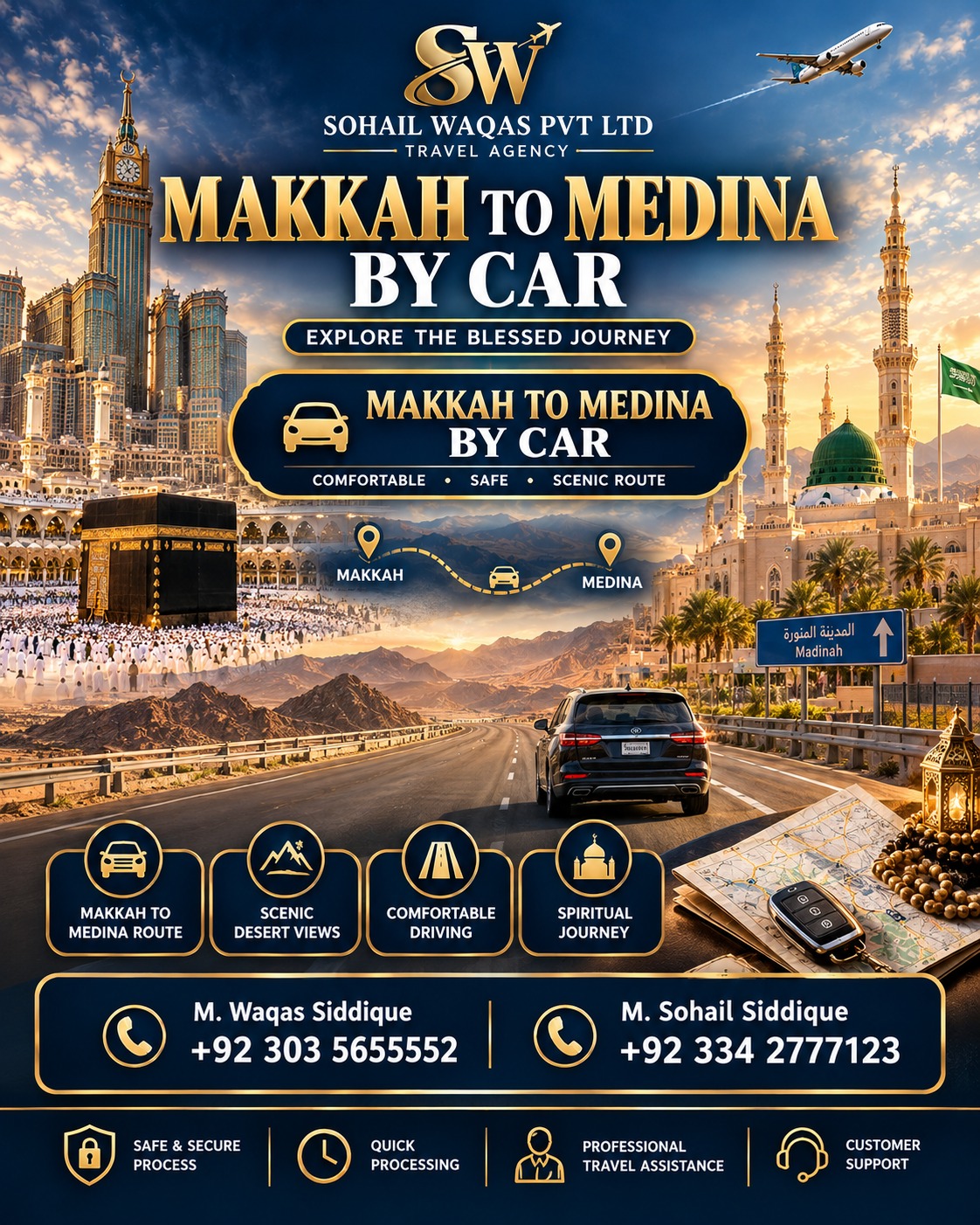
How Far Is Makkah From Medina by Road?
Makkah and Medina are in western Saudi Arabia. The road distance between them is generally around 430–450 kilometres, depending on your starting point, destination, and route.
For many drivers, the journey takes roughly four to five hours of driving under normal conditions. However, this is only a general estimate. Traffic, roadworks, weather, stops, and congestion near city centres can make the trip longer.

If you’re leaving from a hotel near Masjid al-Haram and travelling to accommodation close to Al-Masjid an-Nabawi, your total journey time may differ from a trip between the outskirts of the two cities.
It’s best to allow extra time instead of planning your day around the shortest possible driving estimate. This matters even more if you’re travelling with older family members, young children, or people who need regular breaks.
Quick journey overview
| Travel detail | General guidance |
|---|---|
| Starting city | Makkah, Saudi Arabia |
| Destination | Medina, Saudi Arabia |
| Approximate road distance | 430–450 km, depending on the route |
| Typical driving time | Around 4–5 hours in normal conditions |
| Main travel option | Private car or rental car |
| Common road choice | Major highways connecting Makkah and Medina |
| Recommended preparation | Check navigation, fuel, vehicle condition, and road updates |
Treat these figures as planning estimates rather than guaranteed travel times. Check your navigation app on the day you travel for the route and conditions that apply to your exact locations.
Why Travel From Makkah to Medina by Car?
Driving is a useful option for pilgrims and visitors who value flexibility. You can choose your departure time, decide where to stop, and travel directly to your accommodation instead of arranging separate transfers between transport stations and hotels.
It can also be practical for families or small groups who prefer to stay together throughout the journey.
1. Flexible departure time
When you drive your own or a rental car, you’re not tied to a specific train or bus departure. You can leave after completing your plans in Makkah and choose a time that suits your group.
Still, flexibility doesn’t mean you should ignore road conditions. Check the weather and traffic before leaving, and avoid driving when you’re too tired after a long day of worship.
2. Convenient for families
Travelling with children can involve extra bags, snacks, changes of clothes, and frequent breaks. A car gives you more control over these needs.
You can stop at a suitable service area, allow children to stretch their legs, and keep essential items close at hand. Make sure every passenger uses the correct seat belt and that children have suitable car seats where required.
3. Easier luggage handling
If you’re carrying suitcases, a wheelchair, a stroller, or supplies for several people, a car can make luggage management simpler. You won’t need to move every bag between different transport services.
Before setting off, arrange luggage so that it doesn’t block the driver’s view or move dangerously during sudden braking.
4. Direct travel to your accommodation
A private car can take you from your departure point in Makkah to a permitted drop-off area near your hotel in Medina. This may reduce the need for additional transfers.
However, hotels near the Prophet’s Mosque may be surrounded by busy streets, pedestrian zones, or restricted vehicle access. Check the hotel’s directions and parking instructions before entering the city centre.
5. Freedom to take breaks
A long drive can feel tiring, especially after performing Umrah or spending several days walking around the holy sites. Having a car allows you to take breaks according to your needs.
Don’t wait until you’re exhausted before stopping. A short rest at a suitable service area can make the remainder of the journey safer and more comfortable.
Which Route Should You Take?
The best route depends on your exact starting point, destination, and current road conditions. Most drivers use major highways linking Makkah and Medina, with navigation apps helping them choose the most suitable road on the day.
Before you leave, enter the actual addresses of your hotel and destination into your navigation app. Searching only for “Makkah to Medina” may give you a route to a city-centre point rather than the entrance you need.
Planning your route
Use these steps to prepare:
-
Confirm your destination in Medina. Check your hotel’s full address and its recommended vehicle entrance.
-
Open a navigation app. Review the suggested route and estimated arrival time.
-
Check live traffic. Look for congestion, roadworks, closures, and other delays.
-
Choose a suitable rest stop. Identify service areas along the route before starting.
-
Check the route again before departure. Conditions can change, so use current directions rather than relying only on an old screenshot.
Major highways are generally the most practical choice for intercity travel. Avoid taking unfamiliar side roads simply because a navigation app predicts a small time saving. A reliable, clearly marked route is usually better than a shortcut you don’t know.
Should you use a navigation app?
Yes. A current navigation app can help you follow the correct road, find fuel stations, locate rest areas, and adjust your route when traffic changes.
Download an offline map if your app supports it. Mobile coverage can vary, and having an offline map provides a useful backup if your connection drops.
Set up navigation before the car moves. If you need to change the destination or review a route, pull over somewhere safe first.
Step-by-Step: How to Prepare for the Drive
A comfortable road trip begins before you turn the key. Use this simple checklist to reduce the chance of delays and avoidable problems.
Step 1: Choose your departure time
Think about how much rest you’ve had, when you need to arrive, and what the traffic may be like. Leaving after a good night’s sleep is usually safer than setting off late after a demanding day.
If you want to arrive in Medina before a particular prayer or hotel check-in time, build in a buffer. Don’t rely on reaching the city at the exact minute shown by a navigation app.
During Ramadan, Hajj, and other busy travel periods, traffic patterns can change significantly. Check current travel conditions rather than assuming the road will be quiet.
Step 2: Check the vehicle
If you’re using your own or a rental car, take a few minutes to inspect it.
-
Check tyre condition and pressure.
-
Confirm that headlights, brake lights, and indicators work.
-
Make sure the air conditioning is working properly.
-
Check the fuel level and plan where to refuel if needed.
-
Confirm that the spare tyre or appropriate emergency equipment is available, where applicable.
-
Adjust mirrors and seats before departure.
If you’re renting a car, make sure you’re authorised to drive it and understand the rental company’s roadside assistance process. Keep the relevant documents accessible.
Step 3: Pack essential items
Keep important items within reach rather than burying them under luggage.
Useful items include:
-
Identification and travel documents.
-
Your driving licence and vehicle documents.
-
Mobile phone and charging cable.
-
A power bank, if available.
-
Drinking water and light snacks.
-
Any personal medication you normally need.
-
Sunglasses and suitable sun protection.
-
Hotel details and emergency contact information.
Don’t place loose heavy items where they could move into the passenger area during sudden braking. Secure luggage in the boot or another suitable storage area.
Step 4: Confirm your route and stops
Review the route before leaving Makkah. Choose a suitable place to stop if you need fuel, food, a restroom, or a short break.
You don’t have to plan every minute. The goal is to know where you can safely stop rather than searching urgently when everyone is tired.
Step 5: Tell your group what to expect
If you’re travelling with family, explain the approximate driving time and the plan for breaks. Let passengers know that the schedule may change because of traffic or road conditions.
For group travel, agree on who will manage navigation and keep the driver’s phone use to a minimum. The driver should focus on the road.
Road Safety Tips for Saudi Arabia
Safe driving matters more than reaching Medina quickly. The journey includes long stretches of highway, and drivers may become less alert when the road appears open and predictable.
Follow speed limits
Pay attention to posted speed limits and any temporary restrictions. Don’t assume the limit is the same on every section of road.
Speed cameras and traffic enforcement may be present. Keep a steady, legal speed and leave enough distance between your car and the vehicle ahead.
Avoid distracted driving
Don’t hold or operate your phone while driving. Set navigation before departure, use a permitted hands-free arrangement if needed, and ask a passenger to help with directions.
If you miss a turn, continue safely and let the navigation app recalculate. Never make a sudden manoeuvre across lanes to catch an exit.
Take fatigue seriously
Long-distance driving can make you sleepy, especially after pilgrimage activities that involve considerable walking. Air conditioning and quiet roads don’t remove the risk of fatigue.
Watch for signs such as repeated yawning, heavy eyelids, drifting within your lane, or difficulty remembering the last few kilometres. If these occur, stop at a safe location and rest. Opening a window or turning up the music isn’t a reliable substitute for sleep.
If several people can legally and safely drive the vehicle, sharing the driving may help. Otherwise, plan breaks and avoid starting when tired.
Be prepared for weather changes
Heat can make vehicle problems more serious, while dust, rain, or reduced visibility can affect road safety. Check the forecast before leaving and adjust your plans if conditions are poor.
Keep a safe following distance, use headlights when appropriate, and slow down when visibility or grip is reduced. Never stop in a live traffic lane to take photographs or check a map.
Know what to do if the car develops a problem
If you experience a mechanical problem, move to a safe place away from moving traffic if possible. Use hazard lights when appropriate, follow local road-safety guidance, and contact roadside assistance or the relevant emergency service.
Don’t attempt repairs in an unsafe position beside a busy highway. If you have a rental car, follow the company’s instructions for breakdowns and accidents.
Where Can You Stop Along the Way?
A journey of several hours is easier when you have a sensible plan for breaks. The exact places available will depend on your route and current services, so use your navigation app to identify suitable stops before leaving.
Fuel and service stations
Service stations may provide fuel, toilets, refreshments, and other basic facilities. Check that the station is on your route and that it is suitable for your vehicle.
If your fuel level is getting low, don’t wait until the warning light appears before looking for a station. Refuel with a reasonable reserve, particularly if you’re travelling at an unusual time or don’t know the area.
Food and refreshments
A light meal or snack can help you stay comfortable during the trip. Choose food that suits your needs and avoid eating in a way that distracts the driver.
Keep drinking water available, especially during hot weather. Passengers should remain hydrated, but the driver should take breaks whenever they need to drink, eat, or adjust something.
Restrooms and short breaks
A brief stop gives everyone a chance to stretch and refresh themselves. If you’re travelling with older passengers, young children, or someone with mobility needs, plan breaks around their comfort rather than following a rigid schedule.
Use designated service areas and parking spaces. Avoid stopping on the roadside unless it is necessary for safety or an emergency.
How often should you stop?
There isn’t one ideal schedule for every driver. Your need for breaks depends on sleep, health, weather, traffic, and how demanding the day has been.
As a general safety habit, take a break before you feel exhausted. If you’re struggling to concentrate, stop as soon as you can do so safely.
Travelling With Children or Elderly Family Members
For many pilgrims, the road journey is a family trip. A little extra preparation can make it less stressful for everyone.
If you’re travelling with children
-
Use an appropriate child restraint according to local rules and the child’s size.
-
Pack snacks, water, wipes, and a change of clothes.
-
Keep a favourite small toy or quiet activity available.
-
Plan stops so children can use the restroom and stretch.
-
Never leave a child unattended in a parked vehicle, especially in hot weather.
Explain the journey in simple terms so children know what to expect. If they become restless, stop at a suitable place rather than allowing distractions to build while the car is moving.
If you’re travelling with older passengers
Ask about comfort and mobility needs before departure. Keep any necessary medication accessible, and choose rest stops with facilities that suit your group.
Avoid rushing passengers in crowded areas when you reach Medina. Check whether your hotel has a convenient drop-off point and how far it is from the entrance to the room.
If a passenger has a medical condition that could be affected by a long drive, seek appropriate medical advice before travelling and plan around their needs.
What to Know About Driving a Rental Car
A rental car can be a convenient way to travel between Makkah and Medina, especially if you don’t have access to a private vehicle. Before booking or collecting the car, check the rental company’s terms and the documents required for your circumstances.
Confirm eligibility and documentation
Driving requirements may differ according to your nationality, residency status, licence, and the rental company’s policies. Confirm that your licence is accepted and that you meet the relevant requirements before collecting the vehicle.
Ask what documents must remain in the car and what to do if police or other authorised officials request them.
Understand the rental agreement
Read the agreement carefully. Confirm who is allowed to drive, what insurance or protection applies, how roadside assistance works, and what the company requires if the car is damaged.
Don’t assume that a rental vehicle can be taken across every border or used for every type of trip. For travel entirely within Saudi Arabia, check the terms that apply to your specific booking.
Inspect the car before leaving
Look for existing damage and make sure it is recorded according to the rental company’s process. Take photographs if permitted and keep a record of the vehicle’s condition.
Check the fuel policy, return arrangements, and the location where the vehicle must be returned. This is especially useful if you’re collecting the car in Makkah and planning to return it in another city.
Arriving in Medina: What Should You Plan?
The final part of your journey deserves attention too. Traffic and pedestrian movement around central Medina can be busy, especially near Al-Masjid an-Nabawi and during periods of high visitor numbers.
Confirm your hotel entrance
Before you arrive, check your hotel’s exact location and instructions for vehicle access. A hotel may be close to the Prophet’s Mosque on a map but still require you to use a particular road or drop-off point.
Some streets may have access restrictions, pedestrian-only areas, or temporary traffic arrangements. Follow official signs and the directions provided by your accommodation.
Plan parking before entering the centre
If you’re keeping the car in Medina, check whether your hotel offers parking and whether it needs to be arranged in advance. If it doesn’t, identify an authorised alternative before you arrive.
Don’t drive into restricted streets simply because your destination appears nearby. A little planning can save time and reduce stress when you’re tired after the drive.
Allow time to settle in
After arriving, unload your luggage safely, check into your accommodation, and give yourself time to rest. If you intend to visit Al-Masjid an-Nabawi soon after arrival, consider how tired the group is and how long it will take to reach the mosque entrance.
A flexible schedule is usually more helpful than trying to fit every activity into the first few hours.
Comparing Car Travel With Other Transport Options
Driving is not the only way to travel between Makkah and Medina. The best choice depends on your group size, luggage, schedule, and preference for driving or relaxing during the trip.
| Factor | Private or rental car | Train | Bus or organised coach |
|---|---|---|---|
| Departure flexibility | Usually high | Follows scheduled departures | Follows scheduled departures |
| Route | Direct road journey to permitted destinations | Connects designated stations | Depends on the operator and service |
| Luggage handling | Managed by your group | Subject to service rules | Subject to operator rules |
| Driver responsibility | You or an authorised driver must drive | No driving required | No driving required |
| Rest stops | You choose suitable stops | Depends on the service | Depends on the service |
| Best suited for | Families or groups wanting flexibility | Travellers who prefer rail | Travellers who prefer organised road transport |
The Haramain High Speed Railway is a well-known alternative connecting Makkah and Medina, with stations serving the wider travel network. If you choose the train, check current timetables, station locations, luggage rules, and the transfer needed to reach your hotel.
A bus or organised transfer may also suit travellers who don’t want to drive. Compare the full journey, including how you’ll reach the departure point and continue from the arrival station, rather than looking only at the time spent on the main service.
Common Mistakes to Avoid
A few planning errors can turn an easy journey into a tiring one. Keep these points in mind before setting off.
Leaving without checking live traffic: A route that was clear yesterday may be busy today. Review current conditions before departure.
Relying entirely on the estimated arrival time: Navigation apps cannot predict every delay. Allow a buffer for breaks, traffic, and city-centre access.
Driving while tired: This is one of the most serious mistakes on a long journey. Rest before leaving and stop if you feel sleepy.
Ignoring vehicle checks: Tyre problems, low fuel, or faulty lights can cause delays and create safety risks. Inspect the car before starting.
Forgetting hotel access arrangements: Central areas may have restrictions or limited parking. Confirm the correct entrance and drop-off point in advance.
Packing too much into the day: Don’t plan a demanding sightseeing schedule immediately before or after a long drive. Keep the day manageable.
Using a phone while driving: Set up your route before moving and let a passenger handle navigation changes where possible.
Not carrying essential documents: Keep the required identification, driving documents, and rental information accessible throughout the trip.
Contact Details
SOHAIL WAQAS PVT LTD — Travel Agency
M. Waqas Siddique: +92 303 5655552
M. Sohail Siddique: +92 334 2777123
Contact SOHAIL WAQAS PVT LTD for assistance with travel planning and related travel services for your Saudi Arabia journey.
Related Reading: Bus Medina to Makkah: Complete Travel Guide — full guide
Related Reading: Places in Makkah: Best Places to Visit and Explore